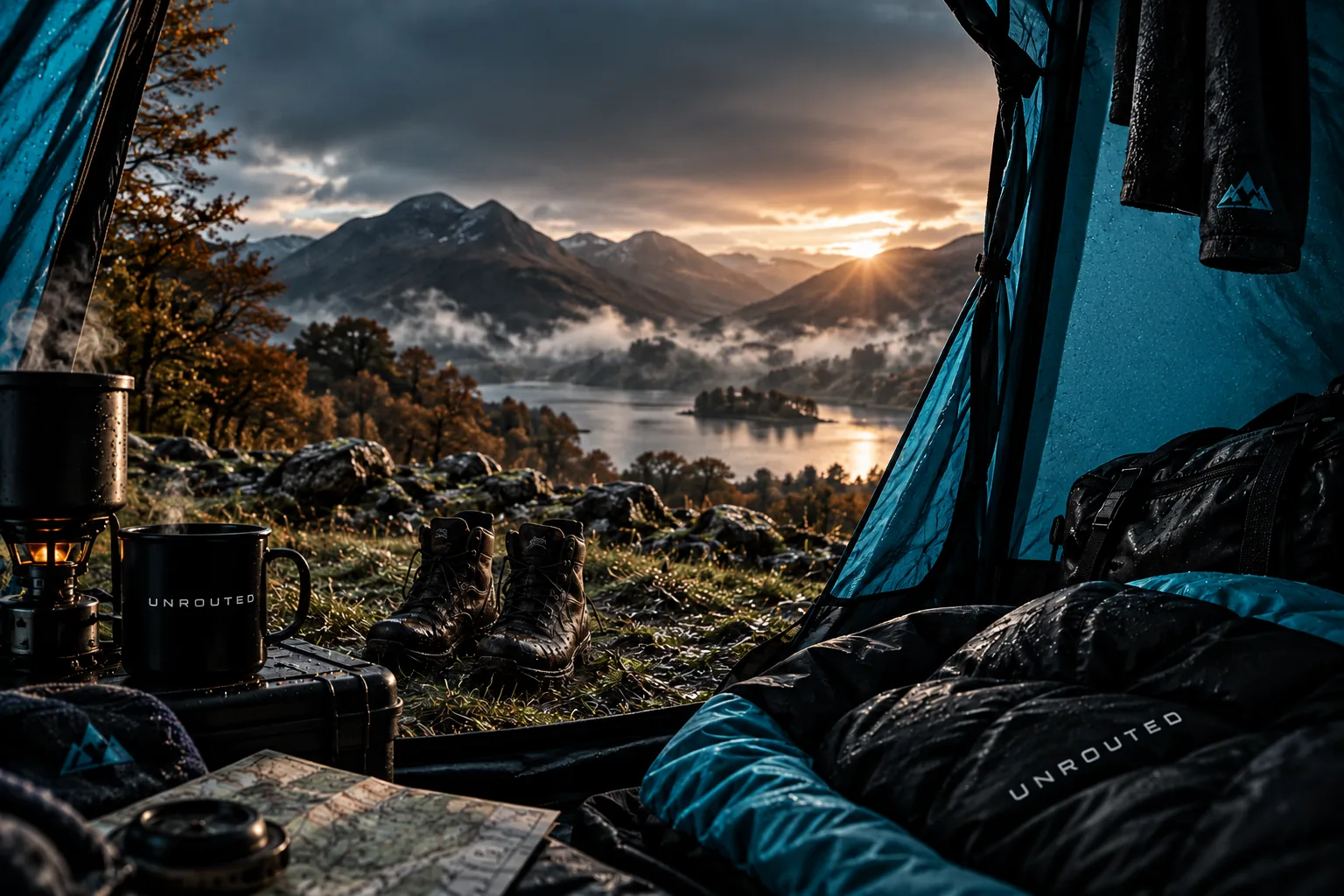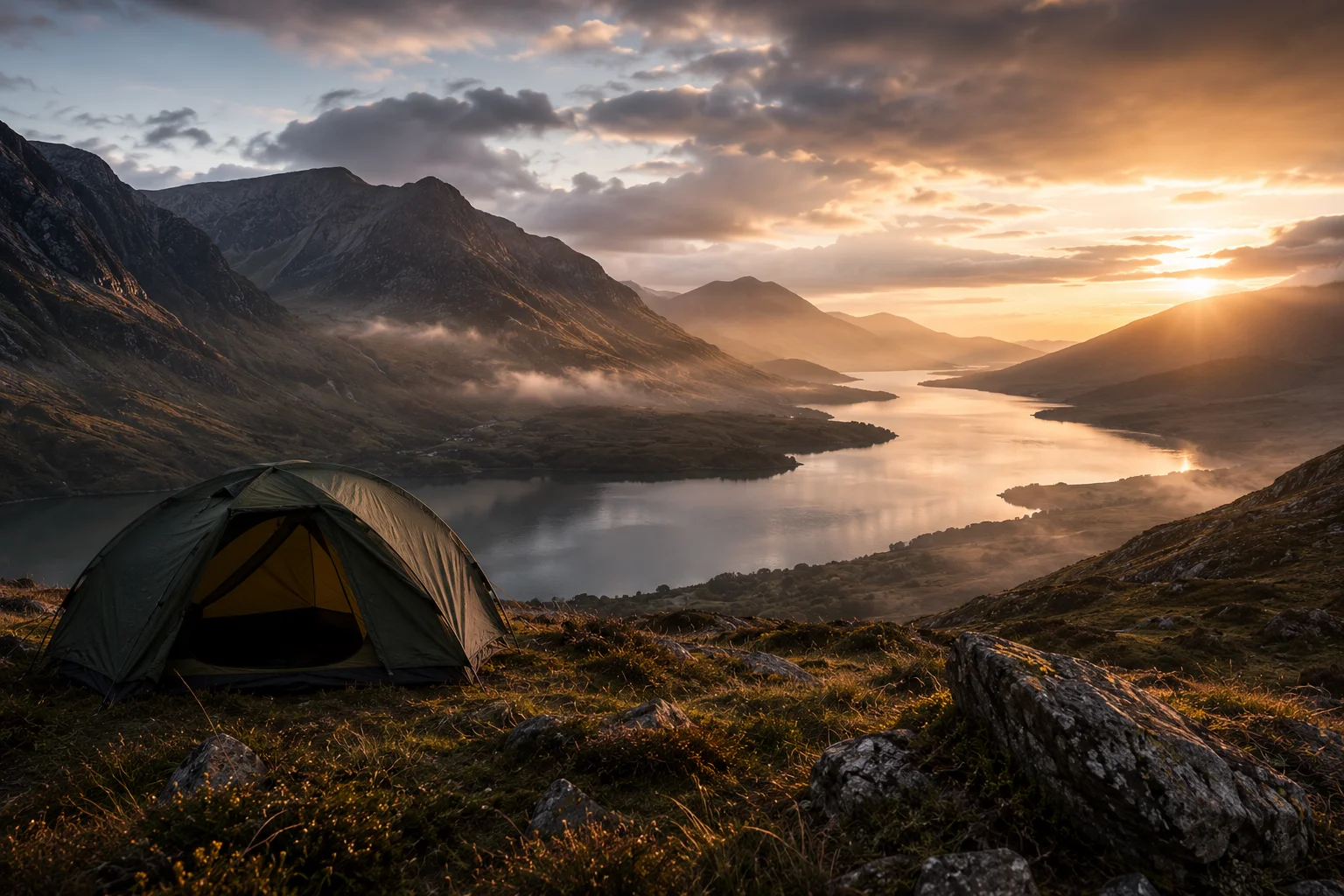
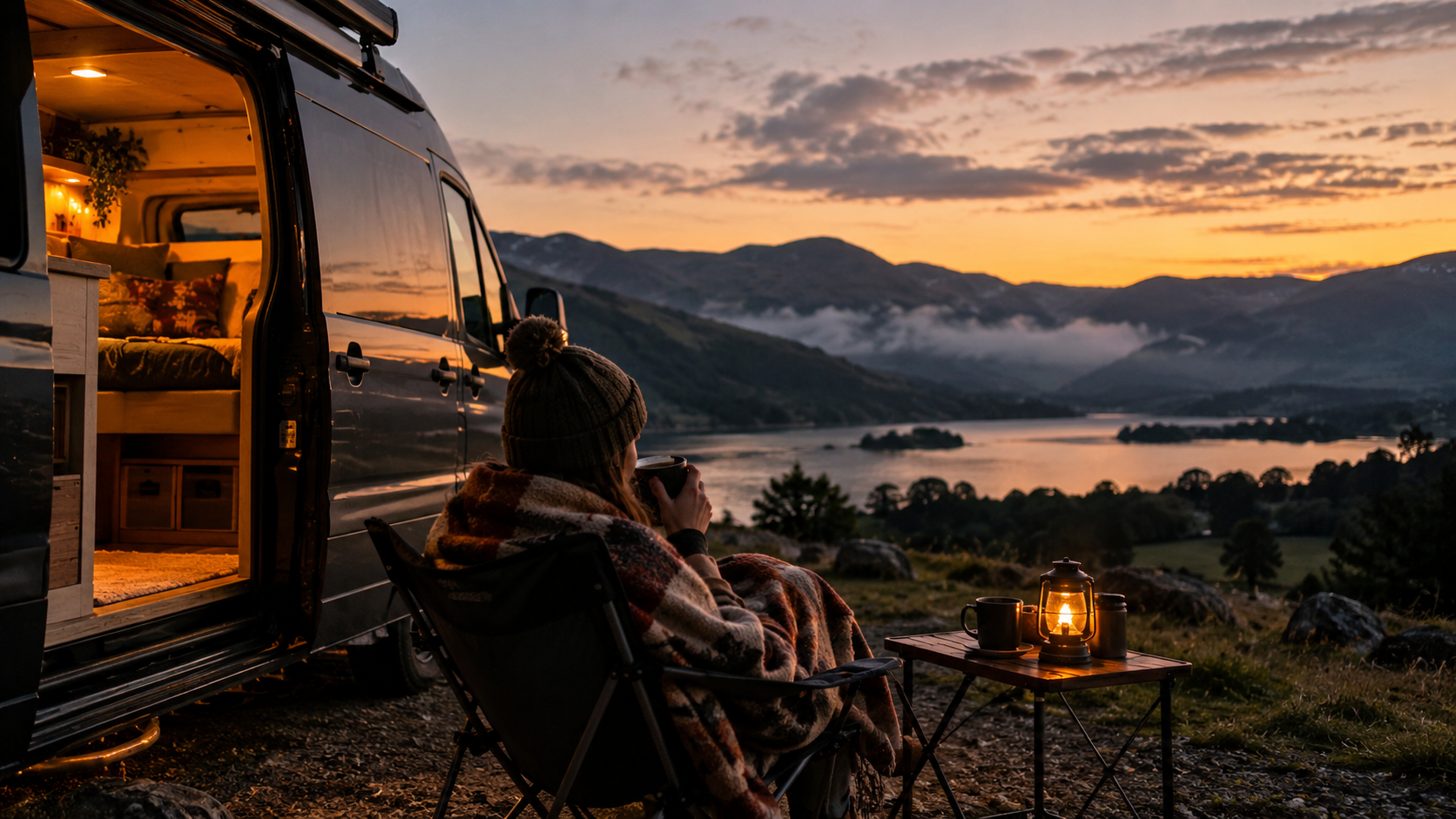
There’s a very specific moment on a British camping trip when everyone stops pretending they’re warm.
It usually happens just after sunset.
All afternoon, everything has been brilliant. The boots are muddy, the kids have disappeared into the trees, somebody’s opened something cold from the cool box and the weather has, against all reasonable expectations, actually behaved itself.
You start thinking you’ve cracked it. This is the life. Then the sun drops behind the hills. And Britain remembers who it is. Within twenty minutes, someone has put their coat back on. Then another layer. Then the coat they said they definitely wouldn’t need. Someone starts rubbing their hands together.
And eventually somebody says the sentence that changes the entire evening:
“Is anyone else absolutely freezing?”
Game over.
The Outdoors Has a Temperature Problem
We spend a lot of time talking about getting outside.
Walk further. Camp more. Put the phone down. Take the kids. Buy the van. Find somewhere without Wi-Fi.
We agree with all of it.
But there’s something slightly dishonest about the beautiful photographs of outdoor life.
Nobody posts the bit at 10:43pm when they’re wearing three hoodies inside a sleeping bag wondering whether going home would technically count as giving up.
Because being cold changes everything. A view can be spectacular. A campsite can be completely empty. The stars can be ridiculous.
But if your feet feel like two frozen potatoes, you’re probably not appreciating Orion quite as much as you thought you would.
And while there’s no single trick that makes a cold British night suddenly tropical, a few simple decisions can make an enormous difference.
How to Stay Warm Camping in the UK: 10 Things That Actually Help
1. Insulate Yourself From the Ground
People naturally think about what goes over them at night, but what sits underneath you matters too.
The ground can pull heat away from your body, so a suitable insulated sleeping mat or sleeping setup can make a big difference.
If you're using a camping air bed, remember that a large volume of cold air underneath you isn't necessarily warm just because it's comfortable.
2. Use a Sleeping Bag Suitable for the Conditions
Not all sleeping bags are designed for the same temperatures.
Check the manufacturer's temperature guidance and choose your sleeping bag for the conditions you're actually expecting rather than simply the season written on the calendar.
British autumn weather has a habit of making September feel like November.
3. Don't Get Into Bed Already Freezing
If you're already extremely cold when you climb into your sleeping bag, you're asking your sleep system to do a much harder job.
Keep moving before bed, get properly dressed and make yourself comfortable before settling down.
4. Get Out of Damp Clothes
That slightly damp T-shirt you've been wearing all afternoon might not bother you while you're walking.
Once you've stopped moving, it can.
Keep dry clothes specifically for the evening and sleeping where possible.
Future you will be grateful.
5. Protect Tomorrow's Clothes
There are few experiences more character-building than putting on freezing damp trousers at 7am.
Keep spare clothing dry and protected overnight. It isn't glamorous.
Neither is hopping around a tent trying to put cold socks on.
6. Eat and Drink Properly
Cold evenings are not the time to realise you forgot dinner. Plan proper food and keep yourself hydrated.
And yes, holding a hot drink while looking across a valley somehow makes you feel approximately 37% more outdoorsy.
We haven't scientifically verified that number.
7. Look After Your Head, Hands and Feet
Cold fingers and feet have an impressive ability to become the only thing you can think about.
Pack suitable socks, a hat and gloves when the forecast warrants them.
They're small items that can make a cold evening much more enjoyable.
8. Think About What's Under Your Air Bed
A comfortable bed isn't automatically a warm bed.
Depending on your setup and conditions, additional appropriate insulation between you and the cold ground may improve comfort.
9. Prepare Before the Sun Goes Down
This is the one everybody learns eventually.
Don't wait until you're freezing to start looking for another layer.
Temperatures can drop quickly after sunset, particularly in exposed or rural locations.
Get the warmer clothes out while you can still see what you're doing. It's the lesson behind every autumn camping trip in Britain, and why camping in September rewards a little preparation.
10. Warm the Person, Not the Entire Outdoors
There’s an interesting idea at the centre of outdoor comfort.
You don't necessarily need to change the environment around you.
Sometimes it makes more sense to concentrate on keeping the person comfortable.
Less waste. Less unnecessary equipment. Less trying to turn the outdoors into indoors. Just enough comfort to make you want to stay. And that's an idea we've been thinking about quite a lot.
The Best Gear Sometimes Does Almost Nothing
There’s an obsession in the outdoor world with equipment that does more.
More power. More features. More pockets. More numbers printed on the box.
But some of the best things you take outdoors have a much simpler job.
They make something uncomfortable comfortable. They keep you dry. They give you light. They give you somewhere decent to sit. They keep your coffee hot. They make you warm.
And when something does that properly, you almost stop noticing it.
That might actually be the point.
Good outdoor gear shouldn’t make the outdoors feel more complicated.
It should remove the reasons you’d rather be indoors.
Five More Minutes
Maybe that’s the real measure of good outdoor gear. Not how impressive it looks on a specification sheet. But how much longer it makes you want to stay. Five more minutes outside the tent. Another coffee overlooking the valley. Another hour talking nonsense outside the van. One more chapter before turning the light off. A child who isn’t asking to go home yet.
Because some of the best memories happen after the sensible decision would have been to pack everything away.
And sometimes all you need is a little more comfort to reach them.
Staying Warm While Camping: Quick Questions
How do you stay warm in a tent at night?
Use a sleeping bag suited to the conditions, insulate yourself from the ground, change into dry clothes and get your warmer layers on before the temperature falls.
Why am I so cold on an air bed when camping?
A large volume of cold air beneath you, with little insulation between you and the ground, can leave you feeling cold, depending on the conditions and your setup.
What should I wear camping on a cold night?
Dry layers suited to the conditions, with good socks, a hat and gloves. Keep a set of clothes just for the evening and sleeping.
Is autumn a good time to go camping in the UK?
It can be brilliant, with quieter campsites and beautiful conditions. But temperatures and weather can change quickly, so preparation matters.
We Think About This A Lot
Probably more than most people realise.
Because somewhere behind everything you’ve seen from UNROUTED so far, there’s a question we keep coming back to:
“How do you make being outdoors more comfortable without removing the very thing that makes it outdoors?”
We have a few thoughts. Some have stayed as scribbles. Some have made it considerably further than that.
And there are things sitting behind the scenes at UNROUTED that we’re incredibly excited to eventually show you.
But not yet. For now, autumn is here. The evenings are getting colder. The coats are getting thicker.
And somewhere in Britain this weekend, somebody will confidently announce that they “won’t need another layer.”
They will.
Off route. On purpose.
Stay out a little longerComing Spring 2027
Join the UNROUTED First 500 for early access to our first collection, coming Spring 2027.