A tent, a flask and a couple of days with nowhere urgent to be. A break in the Lake District can sound like the simplest thing in the world.
Then you start adding it up. Somewhere to sleep. Fuel to get there. Food, parking and the very reasonable decision that a long walk deserves a pub dinner.
So how much does a weekend in the Lakes actually cost? The answer depends on how you want to spend it. Here is a practical starting point, from a simple camping pitch to a proper bed.
Published prices checked on 24 September 2026. These are examples, not Lake District averages or guaranteed quotes. Food and travel allowances below are illustrative.
Camping: a small bill for a big change of scenery
If you already own the kit, camping can keep accommodation costs down while giving you exactly what you came for: time outside.
At Castlerigg Farm near Keswick, the published non-electric tariff is £12 per adult per night in low season and £14.50 in high season, with a vehicle charged at £5 or £6 respectively.
For two adults with one car, that means £29-£35 a night, or £58-£70 for two nights, before any applicable extras. Large tents can attract an additional charge at busy times. Non-electric camping cannot be reserved in advance, so check arrangements before travelling.
The real question is what the total covers. A per-person rate and an all-in pitch price can look very different until you add everyone, the car and any extras.
Prefer a bed and breakfast?
Camping is not everyone’s idea of switching off. Sometimes you want a dry place for your boots, a comfortable bed and breakfast made by someone else.
As one example, Appletrees Guest House in Keswick lists double or twin rooms at £123 per room per night with breakfast for stays of two nights or more. That makes a two-night stay £246 for two sharing. Its listed room-only option is £100 a night on the same minimum stay.
Those are one property’s rates, rather than a promise of what every B&B will cost. They do show why it is worth comparing what is included, especially breakfast and parking.
Glamping, cottages and Airbnb stays
A roof does not automatically mean a budget option. Glamping covers everything from a basic pod to a private bathroom, kitchen and hot tub.
For example, Coppermines’ Coniston shepherd hut lodges advertise 2026 rates of £130 a night midweek or £175 on Fridays and Saturdays, with a £35 booking fee. A standard two-night Friday and Saturday stay therefore comes to £385 before optional extras. The usual minimum stay is two nights.
For cottages and Airbnb properties, compare the final total for your dates and group. Include any cleaning, service or pet charges, and check minimum stays. A whole property shared between friends may work out differently per person from the same booking for a couple.
A kitchen can also change the food budget. Breakfast at home, sandwiches for a walk and one evening out might suit your trip better than eating every meal in a cafe or pub.
A realistic two-night camping budget
Here is an illustrative budget for two adults travelling together by car, bringing their own camping equipment and mainly self-catering.
| Item | Two-person weekend budget |
|---|---|
| Two nights camping, using the example above | £58-£70 |
| Groceries and simple meals | £40-£60 |
| Fuel allowance | £30-£50 |
| Parking allowance | £10-£20 |
| Coffee or treats | £10-£20 |
| Total for two | £148-£220 |
That is £74-£110 each. It excludes buying or hiring equipment, paid attractions and a pub meal. Fuel depends on your starting point and vehicle; parking depends on where you go.
If you are starting from scratch, price up the equipment before assuming camping is the cheapest choice. Borrowing a tent and sleeping kit for your first trip can help you find out what you actually enjoy.
Spend on the bits that matter to you
Our approach? Pick a base that suits the weekend you want.
Compare midweek and weekend dates. Look at places where you can start a walk from the door or campsite. Check the total before booking, then leave a little room for the things you will remember: a good lunch, a boat trip or another night away.
There is no prize for having the cheapest weekend. But you do not need a luxury booking to come home feeling like you have been somewhere.
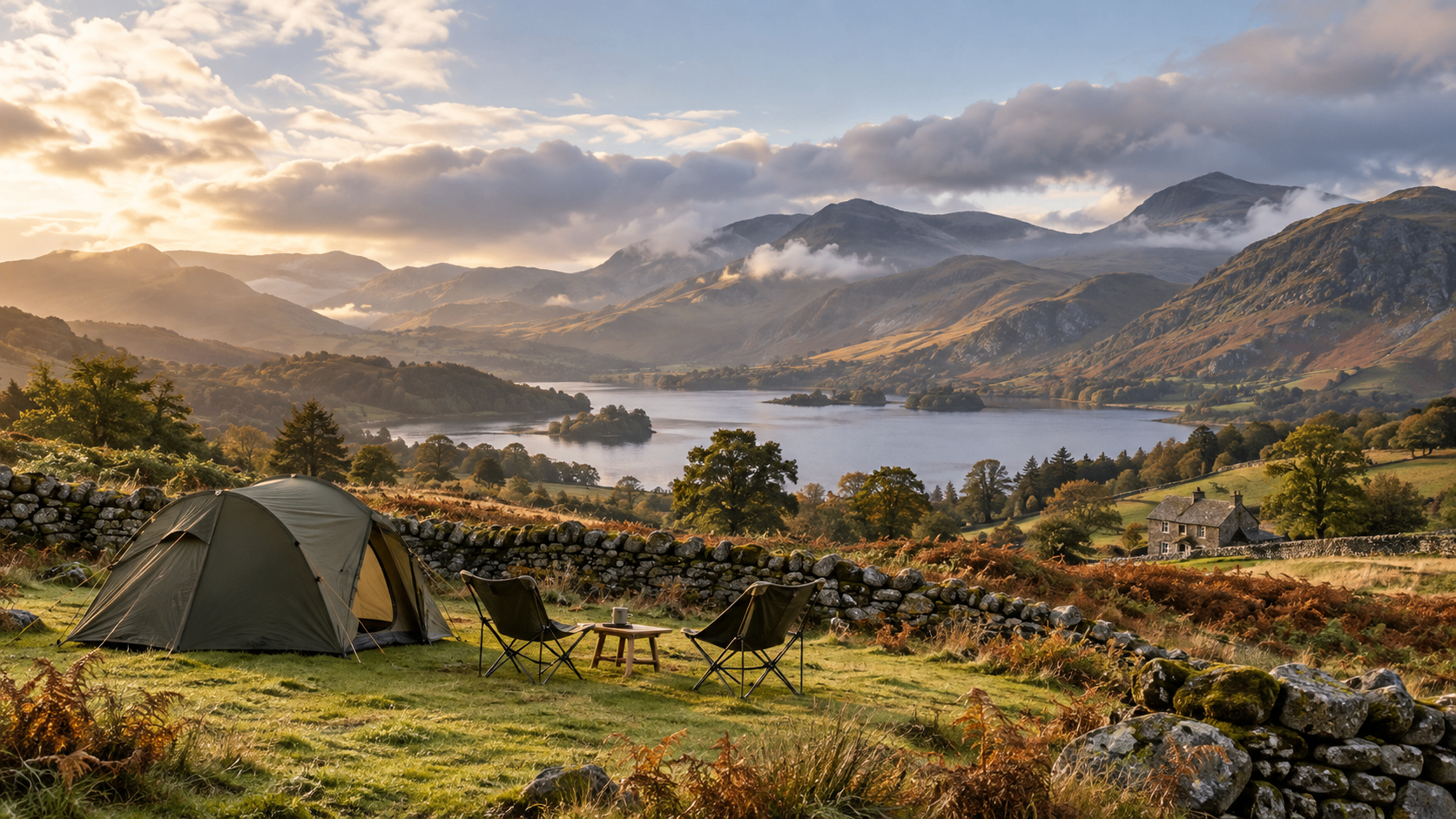
Sometimes a couple of chairs, a warm drink and a view are plenty.
Off route. On purpose.