The British outdoors fights back
Britain isn't Australia.
Nothing is supposed to be trying particularly hard to kill you.
And yet, give the British countryside half a chance and it will sting you, bite you, attach itself to you, burn your legs or leave you sitting outside a tent with one bar of signal Googling: "Is this normal?"
Usually, it is.
Sometimes, however, knowing what got you and what to do next actually matters.
So this is the UNROUTED guide to some of the things you're most likely to encounter outdoors in Britain, from the mildly irritating to the ones worth taking a little more seriously.
No panic. No 47-piece survival kit strapped to your thigh. Just useful information worth knowing before you head out.
Wasps, bees and hornets
The classic British summer ambush.
You're sitting outside. The food comes out. Approximately seven seconds later, so does a wasp.
Most insect bites and stings in the UK aren't serious and should improve within a few days.
If you've been stung and there's still a stinger in the skin, NHS guidance recommends brushing or scraping it sideways with your fingernail or the edge of a bank card rather than pulling it out with tweezers.
Wash the area with soap and water.
For swelling, use an ice pack wrapped in cloth or a cold wet cloth for at least 20 minutes.
Try not to scratch it, however tempting that becomes at 2am inside a tent.
For pain or troublesome itching, NHS guidance says painkillers, antihistamines or hydrocortisone cream may sometimes help. A pharmacist can advise what's suitable.
Ticks: the one worth taking seriously
Ticks are tiny, easy to miss and annoyingly good at attaching themselves somewhere you won't notice until later.
They're found across the UK, particularly in grassy and wooded areas.
Tick bites are often painless, which is why checking yourself after walking through long grass, woodland or moorland is a genuinely good habit.
If you find one, remove it using fine-tipped tweezers or a proper tick-removal tool.
Grip it as close to the skin as possible and pull upwards slowly and firmly.
Don't squeeze or crush the tick. Once removed, clean the bite area.
Most tick bites do not result in Lyme disease, but it's worth knowing what to watch for.
A round or oval rash can sometimes appear after an infected tick bite. It may resemble a bullseye, although it doesn't always look like one.
If you've been bitten by a tick and later develop a round or oval rash or flu-like symptoms, NHS guidance says to contact a GP or NHS 111.
Stinging nettles
Britain's free leg exfoliation service.
You don't even have to see them. One minute you're walking happily along a path.
The next your shin feels like it's been introduced to approximately 400 tiny needles.
Nettle irritation is normally more annoying than serious.
Avoid scratching the affected skin and rinse or gently clean it if needed.
If itching or irritation is troublesome or persistent, a pharmacist can advise on suitable treatments.
And yes, you can spend ten minutes looking for a dock leaf if tradition demands it.
Just don't mistake giant hogweed for one. Which brings us neatly to...
Giant hogweed: do not mess with this one
This is different from brushing against an ordinary nettle.
Giant hogweed can grow several metres tall and its sap can cause serious skin reactions when the affected area is subsequently exposed to sunlight.
Nettle = annoying.
Giant hogweed = take it seriously.
Jellyfish and other sea stings
Because apparently escaping the insects by going into the sea isn't enough.
If you're stung by a jellyfish or another sea creature, NHS guidance recommends getting advice from a lifeguard or someone with first-aid training where possible.
Rinse the affected area with sea water, not fresh water.
Remove visible spines carefully with tweezers or the edge of a bank card.
Then soak the area in very warm water, as hot as can comfortably be tolerated, for at least 30 minutes.
Do not urinate on it. We shouldn't really have to write that. But here we are.
When it's more than "just a sting"
Most outdoor bites and stings settle down without becoming an emergency.
But severe allergic reactions can happen.
If the person has been prescribed an adrenaline auto-injector, follow their emergency plan and NHS guidance for using it.
Pack it before you need it
We're not suggesting you turn every walk into a medical expedition.
But there are a few tiny things that take up almost no room and suddenly seem like an excellent idea when you actually need them.
Affiliate disclosure: Some product links in this Journal are Amazon affiliate links. If you buy through them, UNROUTED may earn a small commission at no extra cost to you.
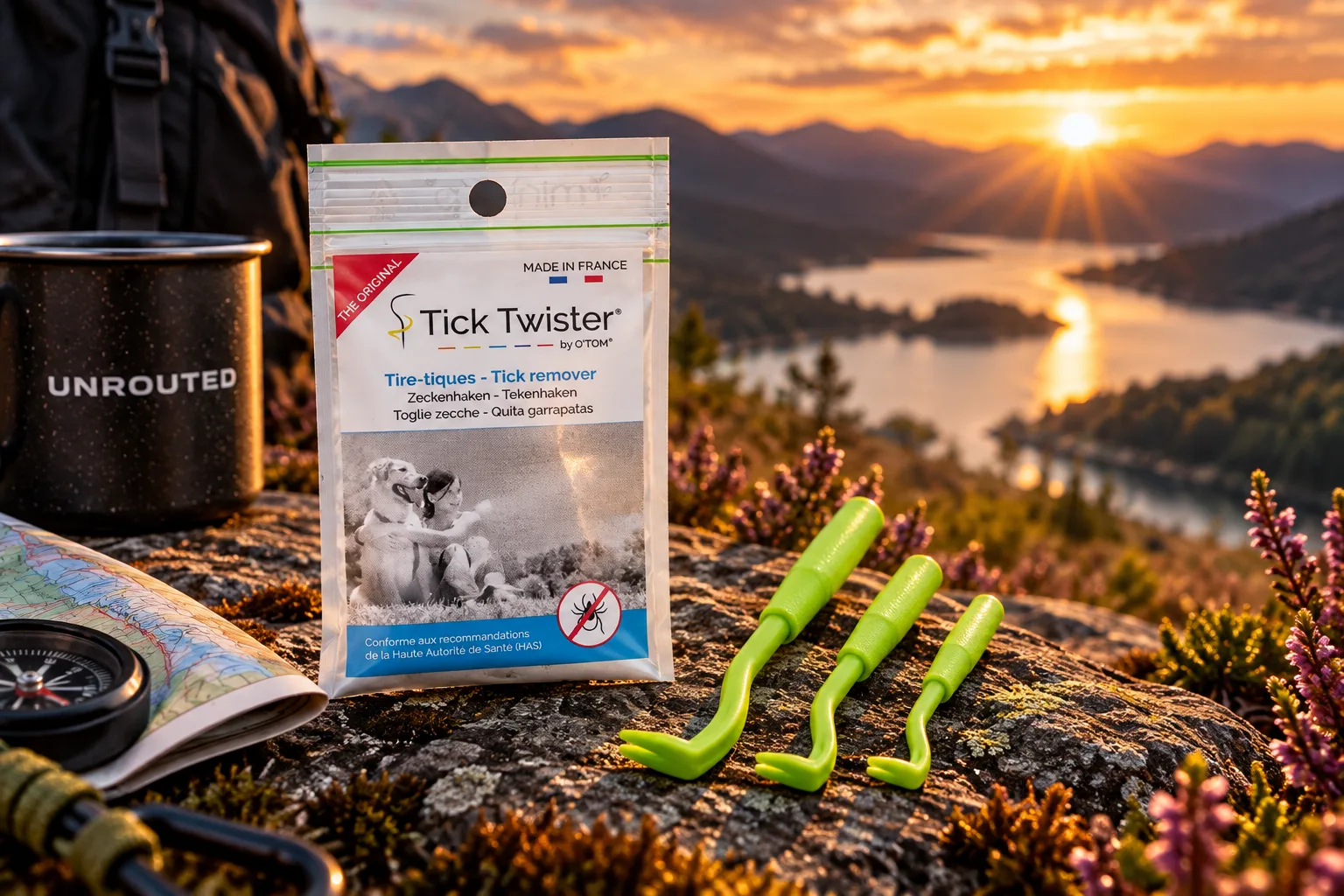
O'Tom Tick Twister
A tiny bit of kit that's worth carrying when you're walking through long grass, woodland or anywhere ticks like hanging around.
View on Amazon ↗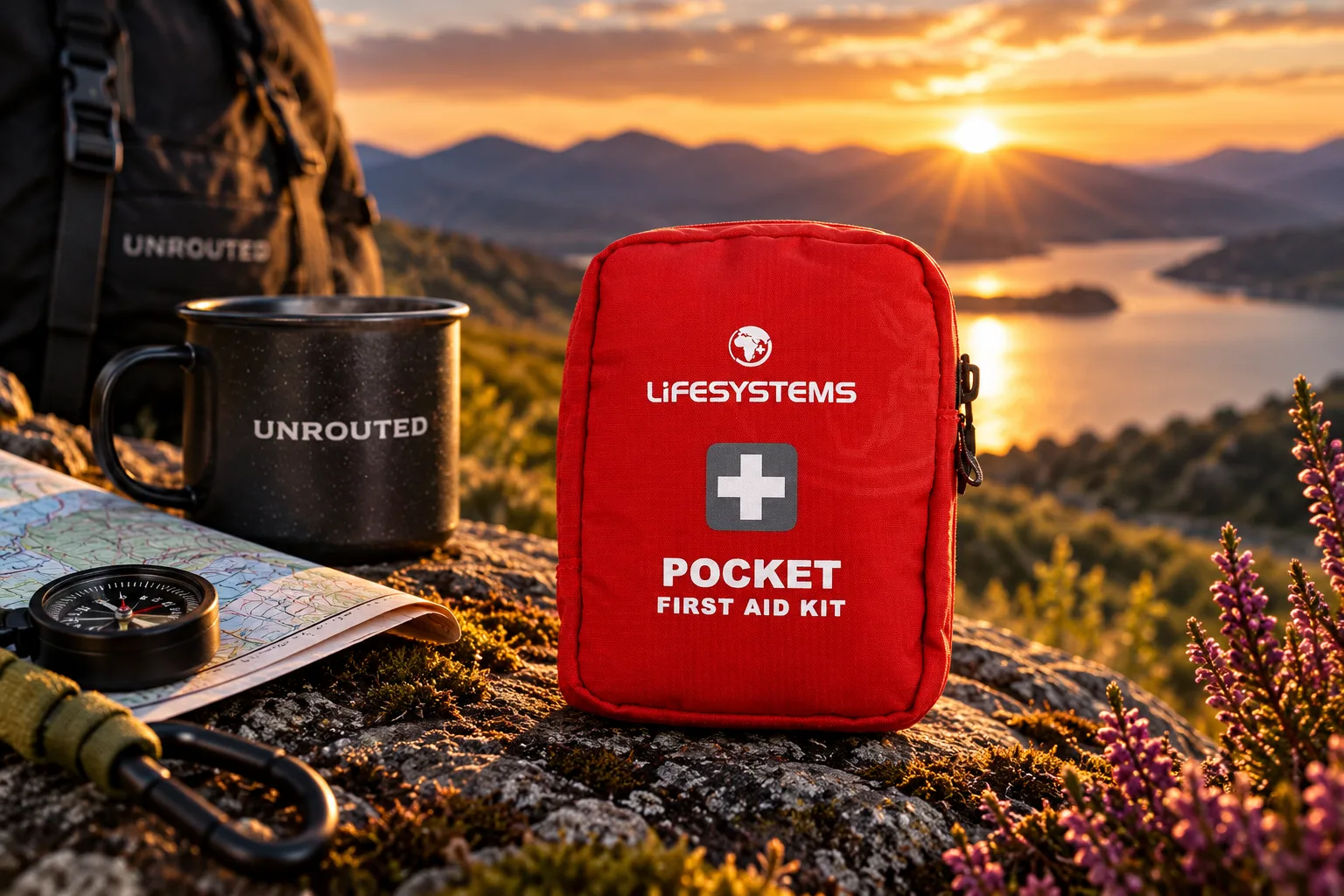
Lifesystems Pocket First Aid Kit
Compact enough to disappear into your pack and useful for the minor cuts, scrapes and outdoor mishaps nobody planned for.
View on Amazon ↗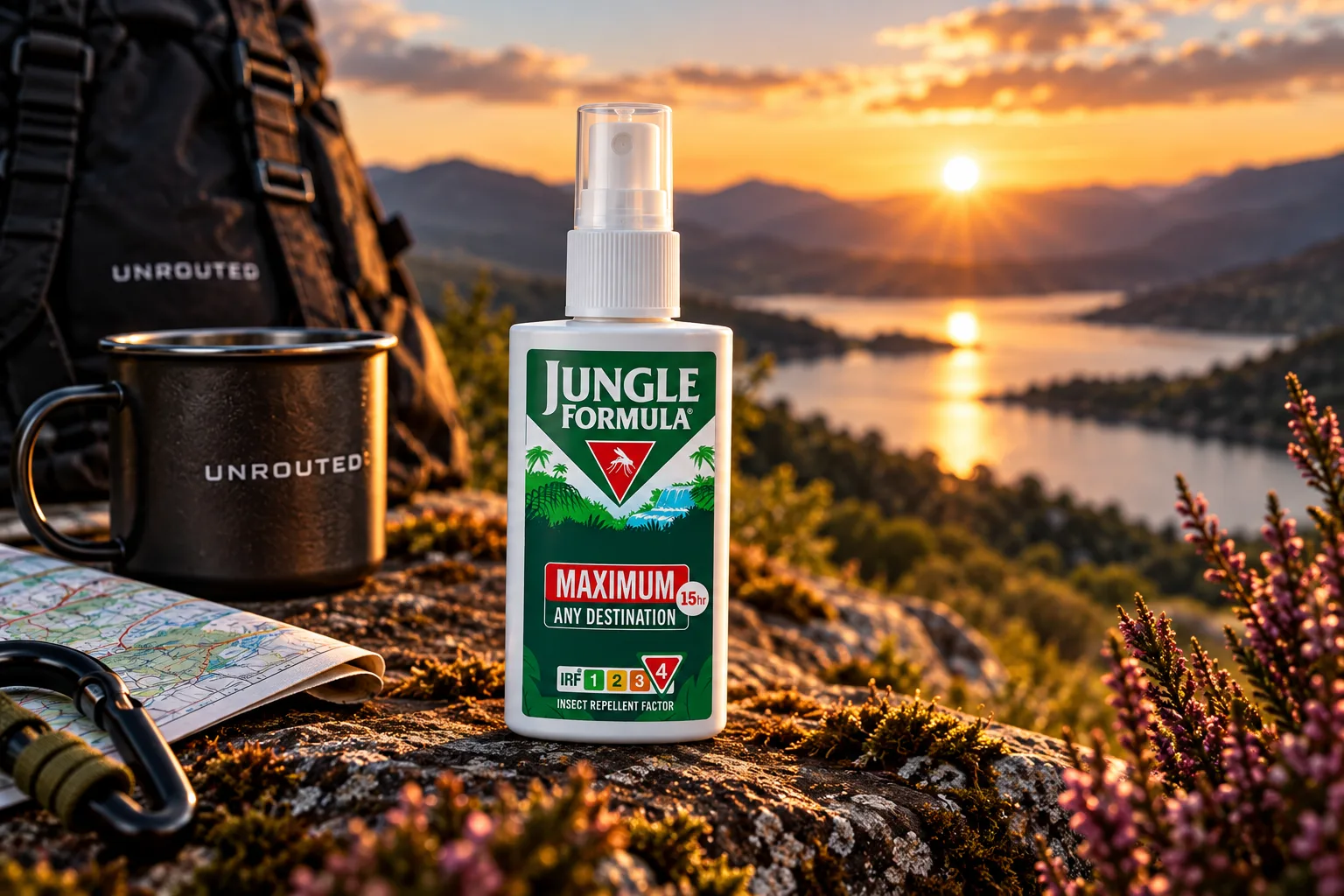
Jungle Formula Maximum Insect Repellent
A sensible addition when midges, mosquitoes and other insects have apparently decided you're dinner.
View on Amazon ↗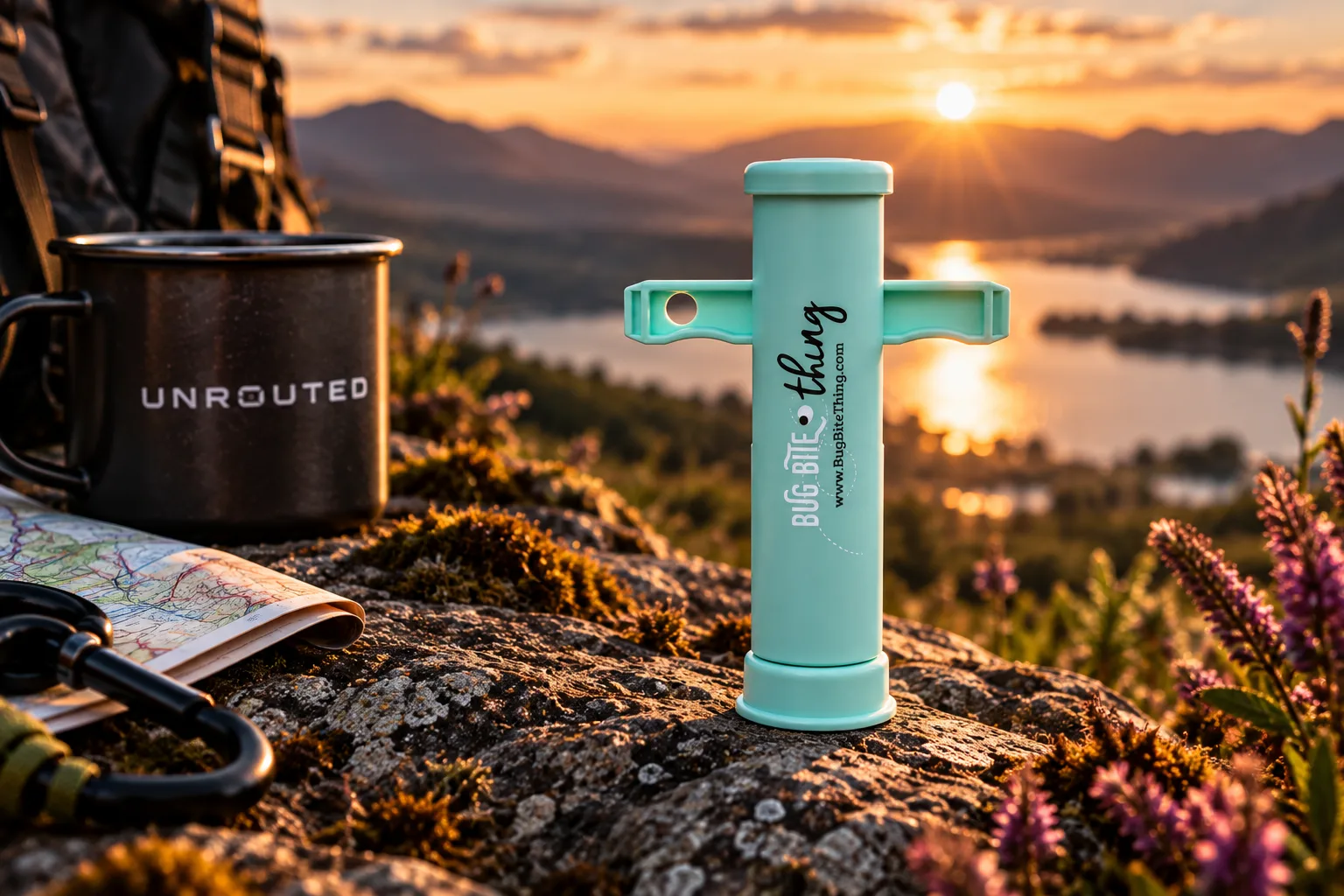
Bug Bite Thing
A small reusable bite tool that takes up almost no room in a day pack and is easy to keep with the rest of your outdoor kit.
View on Amazon ↗The countryside is still worth it
None of this is a reason to stay indoors. Quite the opposite.
Getting bitten by a midge, walking through nettles or spending ten minutes trying to work out whether something on your leg is a tick is practically part of the British outdoor experience.
The trick isn't avoiding everything.
It's knowing what you're looking at, carrying a few sensible bits and knowing when something actually needs proper medical attention.
Then get back to whatever you were doing before nature decided to attack you, whether that's a weekend of autumn camping or simply remembering that adventure doesn't have to be extreme.
Off route. On purpose.
Outdoor information, not medical advice. This Journal is intended as general information only. If you're concerned about a bite, sting, burn or reaction, contact NHS 111, your GP, a pharmacist or emergency services as appropriate. Information checked against NHS and UK public authority guidance. September 2026.
The first UNROUTED collectionComing Spring 2027
We're building outdoor gear for people who'd rather take the interesting route.
The first 500 people to join will receive early access to the first UNROUTED drop.